Why Do I Have Joint Pain at Menopause?
And How Can I Manage It?
And How Can I Manage It?
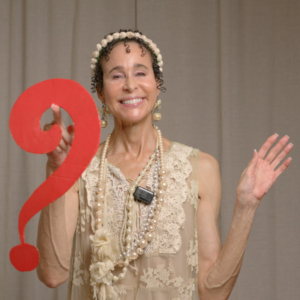
Welcome to “Ask Barbie,” where I answer all your questions and concerns about menopause.
Today’s question is all about your joints and joint issues that come with menopause, which are WAY MORE common than most women (or doctors) realize.
The first thing you need to know in order to understand the answer, is that a joint is defined as the space between two bones.
So, we are talking about the area outside the bone. And we are talking about the space where two bones meet.
A door hinge exists in the space between a door and a wall.

A joint exists in the space between two bones. Here’s a knee joint, as an example.

Door hinges move smoothly and predictably only if they are adequately lubricated to avoid rust, which causes a door hinge to get stiff and immobile. This is why hinges require oil, without which, the rust will prevent its smooth and predictable movement.
When it comes to your joints, they function exactly like door hinges and also require lubrication. The only difference is that the substance that lubricates your joints is not oil. It’s estradiol.
So you can think of your estradiol as a big can of oil for your joints.


As long as your joints have plenty of estradiol, they move smoothly, predictably, and painlessly. But without estradiol, your joints become rusty. And once they become rusty, they cannot move smoothly, predictably, or painlessly.
So one of the most common complaints at the time of peri- or post-menopause is joint pain or joint stiffness.
Unfortunately, most doctors and most patients do not know that joint pain is a direct symptom of estradiol deficiency and just like a rusty door hinge, the longer your joints go without estradiol, the more rust and more damaged your joints become.
There are different degrees of joint damage due to estradiol deficiency. So, if you start experiencing joint pain or joint stiffness at the time of peri- or post-menopause, the first thing that should come to mind is estradiol deficiency.
Don’t run around from doctor to doctor trying to understand why your joints are making you miserable. Those doctors will not know that estradiol is oil for your joints. They will not connect the dots between the presence of your joint pain and the absence of your estradiol.
Now we need to make a huge distinction:
Estradiol loss causes bone loss. That’s osteopenia or osteoporosis. But that’s not a joint issue. It has nothing whatsoever to do with your joints.
Bone loss has to do with the inside of the bone itself.
Estradiol deficiency causes bone loss in addition to joint pain and joint stiffness.
Since estradiol loss is the reason for both, be sure to separate the location of the problem. This is necessary because addressing your management options may differ for the two, even though estradiol deficiency is the underlying cause of the two.
Since estradiol plays such a big role in all sorts of bone and joint issues, let’s make some distinctions between different kinds of bone and joint pathology.
There are three separate types of bone and joint pathology:
Two of the three pertain to your joints. They are arthralgia and arthritis
Osteopenia and osteoporosis pertain to your bone quantity, differing from one another only in terms of degree.
It is possible for you to have all of them. However, they do not all cause the same symptoms. Since our ‘Ask Barbie’ question asks about joint pain, it is critical to make this distinction. So, let’s discuss each one individually, but briefly.
The word “arthralgia” means pain in a joint. It does not specify whether or not the joint is normal or abnormal. And it is absolutely possible to have pain in an absolutely normal joint. So the word arthralgia just means pain.
In contrast, the word “arthritis” means joint inflammation. Inflammation may or may not cause joint pain. Not only that; joint inflammation may occur in a normal or an abnormal joint. With time, the inflammation of arthritis can cause any or all of the following:
There are over 30 different kinds of arthritis. With arthritis, the degree of damage in the joint progresses over time.

Below, you can see the progression of arthritis through the knee joint:

In contrast to arthralgia and arthritis, osteopenia and osteoporosis mean bone loss. They have absolutely nothing whatsoever to do with your joints.
Osteopenia and osteoporosis have to do with loss of bone quantity inside the bone. It’s inside the bone rather than in the space outside the bone.
Below, you can see the progression of arthritis through the knee joint:

If we make a chart to show the differences between bone pathologies, we get this:-

The only thing that all these things have in common is that they are all ultimately due to estradiol deficiency. So, if we expand our chart to include a row for lack of lubrication … which is estradiol deficiency … we get this:

Notice that it looks a lot like estrogen, with different dangling structures.
And here’s the molecular structure of a progestin that is a synthetic form of progesterone:
So the bottom line is that your bones thrive on estradiol. Without it, you are likely to have:
Common manifestations of joint issues at menopause include all the following:
But common manifestations of bone loss at menopause cause:
The one thing they have all they all have in common is that they start when your estradiol production stops.
To ensure you understand the enormity of the impact bone issues have on menopause, here are some statistics.
The common denominators are that they are all due to estradiol deficiency. And neither doctors nor women know that they are due to estradiol deficiency.
Diagnosis of Joint Pain
Joint pain is subjective. People assess pain based on:
But all the diagnostic tests to address bone syndromes are objective and the subjective and objective do not correlate with one another.
This means that most women go to doctors complaining of joint pain, and the doctor does an imaging study to assess her joint status. But if the imaging study does not confirm visible evidence of:
The doctor will tell a menopausal woman that her bones and joints are normal. And he or she will recommend pain medicines as needed.
Rarely do doctors connect the dots between estradiol deficiency and joint pain at menopause.
Joint Management at Menopause
So now we come to all your management options for your joint pain at menopause.
All management options for joint pain at menopause provide relief via a particular “mechanism of action.” The mechanism of action for prevention or management of joint problems at menopause can be any of the following:
So every option you have for preventing or managing your joint problems involves one or more of these mechanisms of action.
Obviously, when you have a joint problem, all you really care about is relief. You may not care about the mechanism of action. But knowing the mechanism of action is beneficial for understanding how each option accomplishes your goals.
And this is important because your joint management options are many.
Deciding which option to use depends in large part on whether or not your joint problem is one that pertains to pain or pathology. The key is always to be realistic about what each option can and cannot do for your joint problem. Using an option that is only capable of alleviating pain will not correct any kind of pathology.
And believe it or not, some of the options that can modify joint pathology can actually cause more joint pain. So everything depends on the specific pathology of your joint problem.
Your management options for joint pain at menopause include all of the following:
The big mistake is assuming that they can all do the same thing. They cannot.
The only thing that can prevent the joint pain in the first place is adequate estradiol replacement. This is because the very cause of joint pain at menopause is estradiol loss.

So, now you know why you have joint pain at menopause. And you also know all your options for managing it. Be sure to make good use of this information. And never forget that the underlying cause is estradiol deficiency. So start there.
Estradiol replacement will not impair your ability to diagnose any other joint problem of any kind.
I hope this helps you.

Don’t take “safer, more effective, natural, or synthetic” at face value. Here’s your homework!
Don’t take “safer, more effective, natural, or synthetic” at face value. Here’s your homework!


Please try the following to resolve any errors:
1. Refresh your cache.
a. Web browsers store temporary files in a “cache” to speed up page loading. Refreshing your cache ensures you see the most recent and accurate version of a webpage. Instructions for Chrome and Safari (Windows and Mac OS) are as follows:
2. Use a different browser to open your questionnaire.
a. If you're experiencing an error while using Google Chrome, try opening your questionnaire on a different browser (Safari, Microsoft Edge, or Mozilla Firefox).
If neither of the above options works, please email clientsupport@menopausetaylor.me with the following:
1. A screen recording (preferable) or screenshot of the error
2. The browser and type of device you're using
a. This information will help us find and resolve the error.